All-Season Motorcycle Gear 2026 | One Jacket, All Weather
Klim and REV'IT laminate jackets handle everything from summer heat to winter cold. The best 4-season motorcycle gear compared.

Obsessive researcher who reads every Reddit thread and expert review so you don't have to. Years of research behind every guide.
Looking for more gear recommendations?
Browse All GuidesRiding only when the weather is perfect means parking the bike for half the year, and the riders who get the most out of their machines are the ones who built a kit that handles whatever the calendar throws at them. The secret is not one magic do-everything jacket. It is a system: a foundation piece that covers most of the year, plus the right layers and seasonal swaps to extend it into the heat of an August commute and the cold rain of a December morning. Build it well and you ride comfortably across summer heat, cold winters, and everything wet in between. The foundation that makes the whole system work is a genuinely waterproof, armored, four-season jacket, and the smartest pick for most American riders is the RST Pro Series Adventure-X: waterproof, CE-armored, and built to vent in the heat and seal in the cold. Let me show you how the system comes together.
I earn a small commission if you buy through links on this page, at no extra cost to you. As an Amazon Associate, we earn from qualifying purchases. I only point riders toward gear I would be happy to wear myself.
In a Rush? Build the system around an all-weather jacket. Get the RST Pro Series Adventure-X, a waterproof, CE-armored four-season jacket that vents in summer and seals in winter. Add a dedicated summer mesh jacket like the KLIM Induction for true heat, vented gloves like the Alpinestars SMX-1 Air V2 for warm weather, waterproof winter gloves like the Alpinestars Andes V3 Drystar for the cold, and waterproof boots like the KLIM Outlander GTX that work year-round. That is a complete four-season setup built on a system, not a single compromise.
| Best For | Product | Why This One |
|---|---|---|
| Overall (All-Weather Jacket) | RST Pro Series Adventure-X | Waterproof, CE-armored, and built to vent in summer and seal in winter |
| Best Summer Mesh | KLIM Induction | Full-mesh airflow that makes triple-digit Fahrenheit commutes survivable |
| Best Winter Gloves | Alpinestars Andes V3 Drystar | A laminated Drystar membrane that keeps hands dry and warm into the cold months |
How I Picked These: A lot of riding experience teaches you that year-round riding is won or lost on whether your gear matches the conditions, and the riders who quit riding in the cold or the wet almost always did so because their gear failed them, not the bike. I lean on owner reports, the consensus across rider communities, and the actual certification details (CE EN 17092 for abrasion, CE EN 1621 for armor, CE EN 13594 for gloves, and CE EN 13634 for boots) plus the membrane technology each piece uses, rather than a marketing line about all-weather performance. I have not weather-tested any of this on a soak rig, and you should be skeptical of any roundup that claims it did for a list like this. What I weigh is whether the waterproofing is a real laminated membrane or a coated liner that wets out, whether the venting actually moves air in the heat, and whether the system as a whole covers the full calendar without forcing you to ride miserable. Gear that fails in the rain is gear that ends rides early.
The System Approach: Why One Jacket Is Not Enough: Here is the idea that changes everything about year-round riding. There is no single garment that is breathable enough for a triple-digit Fahrenheit August commute and warm enough for a freezing December one, because those are physically opposite jobs. The riders who are comfortable in every season do not chase a mythical perfect jacket; they build a system. The foundation is a versatile all-weather jacket that handles spring, fall, light winter, and rain through a combination of a waterproof membrane, removable thermal liner, and vents. On top of that foundation you add the pieces that handle the extremes: a dedicated summer mesh jacket for real heat, base and mid layers for the cold, and seasonal gloves and boots. Think of it as a wardrobe with a workhorse at the center, not a single item doing five jobs badly. That framing is what the rest of this guide builds out.
Mesh-Plus-Liner Versus Dedicated Seasonal Kit: There are two honest philosophies for staying comfortable across seasons, and which one suits you depends on your climate and how much you ride. The first is the all-in-one approach: a single four-season jacket with a waterproof outer, removable thermal liner, and zip vents, like the Pro Series Adventure-X. You manage temperature by adding or removing the liner and opening or closing vents, and one jacket covers most conditions. It is the simplest and most economical path, and for riders in moderate climates it may be all you ever need. The second is the dedicated seasonal approach: a mesh jacket for summer, a waterproof armored jacket for the rest of the year, and serious cold-weather layers for winter. It costs more and takes closet space, but each piece is optimized for its season, so the mesh flows far more air than any four-season jacket with its vents open, and the winter setup is genuinely warm. Most riders in climates with real summers and real winters end up with the all-weather jacket plus a summer mesh jacket, which is exactly the system this guide recommends, because no four-season jacket vents like dedicated mesh when it is over 95 degrees Fahrenheit.
The Foundation: RST Pro Series Adventure-X
Everything in a year-round system hangs off the foundation jacket, and the RST Pro Series Adventure-X is the one I point most riders toward because it does the four-season job genuinely well rather than just claiming to. It pairs a waterproof membrane with a removable thermal liner and direct-vent zips, so it seals out rain and cold with the liner in and flows air with the liner out and the vents open. It carries CE-rated armor at the shoulders and elbows and meets the CE EN 17092 abrasion standard, which is the abrasion certification that actually means something on a jacket.
Who it is for: the rider who wants one jacket to handle spring, fall, light winter, and rain, and who is willing to add a separate mesh jacket only for true summer heat. The detail you only learn from owners is how much the removable thermal liner extends the range, since it turns a waterproof shell into a genuinely warm winter layer and pulls out in minutes when the weather turns. The honest limitation: like most jackets it ships with shoulder and elbow armor but often only a foam pad at the back, so add a CE Level 2 back protector, and a four-season jacket with the vents open still cannot match dedicated mesh in extreme heat. For the bulk of the riding year, in the conditions most American riders actually face, this is the foundation. For the full breakdown of jacket armor levels, see my best motorcycle jackets guide.
RST Pro Series Textile Jacket
RST
Year-round textile jacket for UK commuting. Waterproof membrane, removable thermal liner, CE Level 1 armour. Proven reliability in...
Check Price on Amazon →The Summer Extreme: KLIM Induction
When the temperature climbs into triple digits Fahrenheit, even a four-season jacket with its vents wide open turns into a sauna, and that is the one job it cannot do. The KLIM Induction is the piece that fills that gap. It is a full-mesh jacket built to flow as much air as possible while still carrying CE-rated armor at the shoulders and elbows, so you get genuine abrasion protection and impact armor in a jacket that feels like riding in a breeze. KLIM's reputation for build quality means the mesh and the stitching survive seasons of hard use rather than fraying after one summer.
Who it is for: the rider in a hot climate, or anyone who commutes through a real summer, who wants protection that does not become unbearable when it is over 95 degrees Fahrenheit. The detail worth knowing is that full mesh works by letting air pass straight through the jacket, which is dramatically cooler than vents on a textile shell but gives up wind and rain protection, so it is purely a hot-weather piece. The honest limitation: mesh is useless in the cold and does nothing against rain, so it is the second jacket in the system, not the foundation, and KLIM gear sits at the premium end of the market. In genuine heat, it earns every bit of that. Confirm the CE EN 17092 abrasion class and the CE EN 1621 armor rating, since a mesh jacket still needs both to count as protective gear.
KLIM Induction
KLIM
KLIM's premium hot-weather touring jacket: Karbonite mesh that breathes hard but resists abrasion, with D3O Level 1 armor at the s...
Check Price on Amazon →Summer Gloves: Alpinestars SMX-1 Air V2
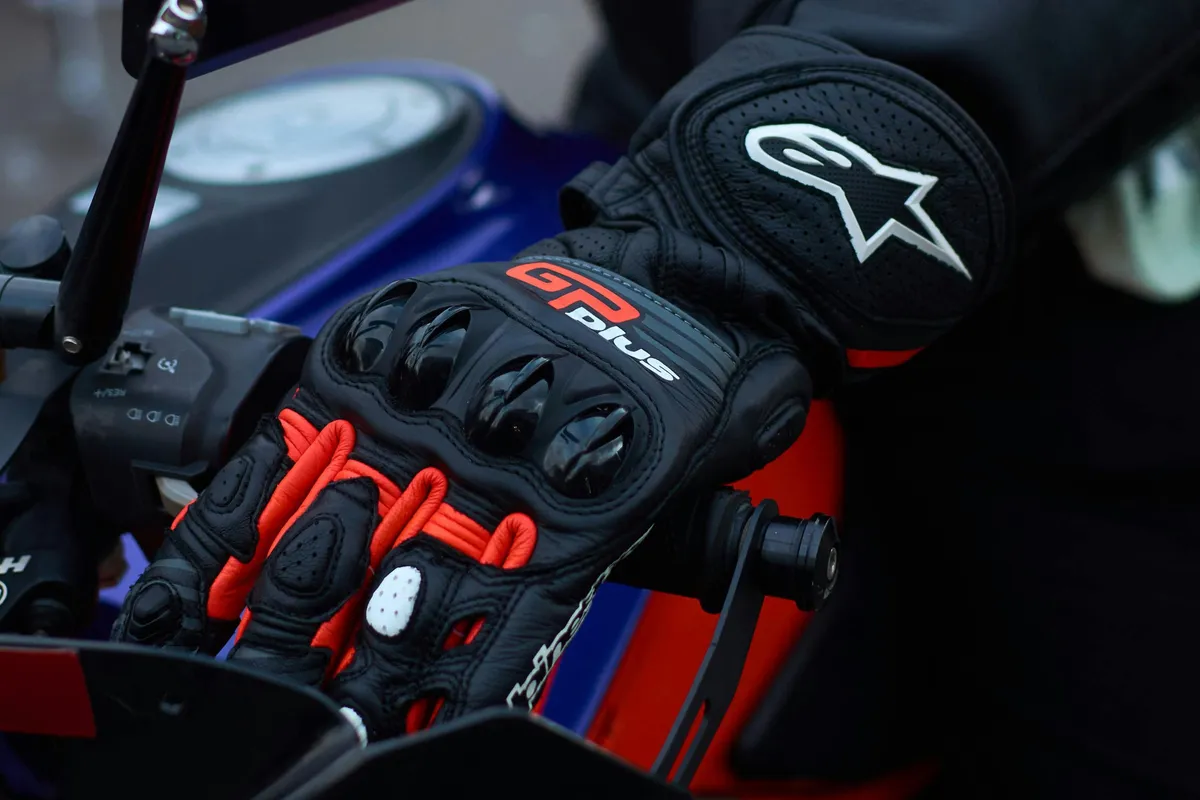
Hands are seasonal just like jackets, and a glove that is perfect in summer is miserable in winter, so the system needs a pair for each. For warm weather, the Alpinestars SMX-1 Air V2 is the glove I point most riders toward because it breathes hard without giving up the protection that makes a glove worth wearing. The vented leather-and-mesh construction moves real air, and it carries a hard knuckle protector, reinforced palm sliders, and full CE EN 13594 certification, with fingertips that work on a phone or GPS screen.
Who it is for: the rider who wants one warm-weather glove that protects properly and stays comfortable from spring through fall. The detail owners learn is how well the airflow holds up at speed, where cheaper summer gloves stay sweaty but never quite cool down. The honest limitation: the short cuff gives less wrist coverage than a gauntlet, so pair it with a jacket whose sleeve closes over it, and Alpinestars sizing runs slightly small, so measure before you commit. As the summer half of a year-round glove pairing, it is hard to beat. The full glove breakdown lives in my best motorcycle gloves guide.
Alpinestars SMX-1 Air V2
Alpinestars
A CE-certified short-cuff summer glove that breathes hard without giving up protection. Ventilated leather and mesh, a hard knuckl...
Check Price on Amazon →Winter Gloves: Alpinestars Andes V3 Drystar
The moment the temperature drops and the rain starts, summer gloves become miserable, and riding cold-handed is genuinely dangerous because numb fingers cannot work the controls precisely. The Alpinestars Andes V3 Drystar is the winter half of the glove pairing. It uses a laminated Drystar waterproof membrane, thermal insulation, and long cuffs that overlap your jacket sleeve to keep water and wind out, and it is CE Level 1 certified so you are not trading protection for warmth.
Who it is for: the cold-weather commuter and tourer who rides through fall and winter and wants dry, warm hands without losing all dexterity. The detail you will appreciate on a wet ride is that a laminated membrane keeps water out far longer than the coated liners in budget winter gloves, which wet through after a season. The honest limitation: a warm waterproof glove is bulkier and less dexterous than a summer glove, and it gets uncomfortably hot above the mid-50s Fahrenheit, so this is the second pair in the system, not a do-everything glove. Most riders who ride year-round own a summer pair and a winter pair, and that is the right call rather than a compromise.
Alpinestars Andes V3 Drystar Gloves
Alpinestars
Winter touring gloves with proven waterproofing. Thermal insulation and long cuffs. Handle UK winter commuting down to 0°C with pr...
Check Price on Amazon →Year-Round Boots: KLIM Outlander GTX
Feet and ankles are weirdly exposed on a motorcycle, and wet feet end a cold ride faster than almost anything, so a year-round system needs a boot that keeps water out and works across the calendar. The KLIM Outlander GTX is the boot I point most riders toward because it nails the balance nobody else hits at this positioning. It has a genuine Gore-Tex membrane, so your feet stay dry in real rain rather than the twenty-minutes-then-soaked experience of cheaper boots. It is CE EN 13634 certified for protection, the sole grips both pegs and trail, and crucially it is comfortable enough to walk in all day, which a lot of waterproof touring boots are not.
Who it is for: the rider who wants one waterproof boot for commuting, touring, and weekend rides across every season. The detail worth knowing is that a real Gore-Tex membrane keeps your feet dry far longer than the coated liners in cheaper boots, which is exactly what you need when a year-round boot has to face the rain. The honest limitation: a tall waterproof boot runs warmer than a vented summer boot in peak heat, and KLIM gear sits at the premium end, but a single year-round boot saves you buying two. The deeper boot breakdown is in my best motorcycle boots guide.
KLIM Outlander GTX
KLIM
A genuinely waterproof touring boot at a sane price: a Gore-Tex membrane keeps feet dry, CE certification handles protection, and ...
Check Price on Amazon →Not sure whether you need the full seasonal system or just the all-weather foundation? The rider type quiz sorts it out in about a minute based on your climate and how you ride.
Base Layers, Mid Layers, and the Membrane Question
The gear most riders overlook is the layering that goes under the jacket, and it is where comfort across seasons is actually won. The principle is the same as hiking: a base layer that moves moisture off your skin, a mid layer that traps warmth, and an outer shell that blocks wind and rain. A good moisture-wicking base layer keeps you dry in summer by moving sweat away from your skin, and in winter it keeps you warm by stopping that sweat chilling you. A fleece or insulated mid layer is what you add and remove to fine-tune warmth, which is far more flexible than relying on one heavy jacket liner. The outer shell is your jacket's waterproof membrane, and this is where the technology matters. A laminated membrane, where the waterproof layer is bonded to the outer fabric, keeps water out far longer than a coated drop-liner that sits loose inside the jacket and eventually wets through. Gore-Tex is the benchmark membrane, and brand-specific membranes like RST's Pro Series waterproofing and KLIM's Gore-Tex construction are doing the same job. When you read a jacket or boot listing, the difference between a named laminated membrane and a vague "waterproof" claim is the difference between staying dry on a long wet ride and being soaked through within the hour.
Rain Shells and the Wet-Weather Reality
Even with a waterproof jacket, a packable rain shell earns its place in your kit, and here is why. A laminated membrane jacket handles most rain, but in a genuine downpour, or when you get caught out in a mesh summer jacket, a lightweight rain shell that packs down small is the difference between continuing and pulling over. The honest truth about staying dry is that water finds the gaps, the neck, the cuffs, the front zip, and the boot tops, so the riders who stay driest pay attention to overlaps: jacket cuff over glove gauntlet, jacket hem over pant waist, and pant over boot top. A waterproof boot like the Outlander GTX only stays dry if water is not running straight down your leg into the top, so the system has to seal as a whole, not just piece by piece. Keep a compact rain shell under the seat or in a tail bag, and the day a summer ride turns wet stops being a problem.
Heated Gear and Cold-Weather Extremes
For riders who push into genuinely cold conditions, below freezing on a regular basis, layering and a thermal liner eventually reach their limit, and that is where heated gear earns its place in the system. A heated vest or heated jacket liner runs off the bike's electrical system or a battery and warms your core directly, which does far more for cold-weather comfort than piling on more passive insulation, since a warm core keeps blood flowing to your hands and feet. Heated grips and heated glove liners attack the other weak point, the extremities, where the Andes V3 Drystar and a thermal layer get you most of the way but a heated element gets you the rest. The honest tradeoff is that heated gear adds cost, a little setup, and a draw on the bike's electrics, so it makes sense only if you regularly ride in real cold rather than the occasional chilly morning. For most riders the layering system plus waterproof winter gloves covers the cold they actually face, and heated gear is the upgrade you add when your riding pushes past what passive insulation can handle. Think of it as the top tier of the cold-weather side of the system, not a starting point.
Putting the Whole System Together by Season
It helps to see how the pieces actually rotate through a year of riding. In peak summer, when it is over 95 degrees Fahrenheit, you reach for the KLIM Induction mesh jacket, the SMX-1 Air V2 vented gloves, and a moisture-wicking base layer that keeps sweat off your skin, with a packable rain shell stowed under the seat for the afternoon storm that catches you out. In spring and fall, the Pro Series Adventure-X becomes the workhorse, liner out and vents open on the warm days, liner in and vents closed on the cool ones, paired with whichever gloves match the morning temperature. In winter, the Adventure-X gets its thermal liner, you add base and mid layers underneath, you swap to the Andes V3 Drystar waterproof gloves, and the Outlander GTX keeps your feet dry on cold wet roads, with heated gear filling the gap if you ride through real cold. In the rain, at any time of year, the laminated membranes in the foundation jacket, the winter gloves, and the boots do the work, while you pay attention to the overlaps so water cannot run into the gaps. Seen this way, the system is not a pile of gear but a small set of pieces you rotate, and once you have built it you stop thinking about whether you can ride and simply check the forecast to decide what to wear.
What to Avoid
Avoid the "one perfect jacket" trap, which is the most expensive mistake in year-round riding. No single jacket vents like dedicated mesh in extreme heat and also keeps you warm and dry in freezing rain, and chasing one that claims to means overpaying for a garment that compromises on both ends. Build a system instead, with a four-season foundation and a summer mesh jacket, and you will be more comfortable for less total than the mythical do-everything jacket costs.
Be wary of vague "waterproof" claims on budget gear. There is a real gap between a named laminated membrane like Gore-Tex or Drystar and a cheap coated drop-liner that wets out after a season, and the listing language is your only clue before you ride in the rain. If a jacket, glove, or boot is sold as "waterproof" but never names a membrane, assume it is a coated liner and expect it to fail in sustained wet.
Skip buying seasonal gear out of season without checking it covers the conditions you actually face. A mesh jacket bought in winter looks like a bargain until the first hot ride reveals it does nothing against rain, and a heavy winter glove bought in a sale is useless for nine months of the year. Buy each piece for the specific job it does in your system. And avoid layering cotton under your gear, since cotton holds sweat against your skin and chills you fast once you stop moving; a synthetic or merino base layer is the right call.
How to Choose: What Actually Matters
Start with the foundation jacket and build out from there. The all-weather jacket is the most important purchase in the system because it covers the largest share of the year, so spend your attention here first. Look for a real laminated waterproof membrane, a removable thermal liner, direct-vent zips, a CE EN 17092 abrasion class, and CE EN 1621 armor at the shoulders and elbows, then add a Level 2 back protector. Get the foundation right and the rest of the system slots around it.
Match your seasonal pieces to your actual climate. A rider in a hot southern state needs the mesh jacket far more than the heaviest winter setup, while a rider in a cold northern climate needs serious cold-weather layers and waterproof gloves more than full mesh. Be honest about the temperature range you actually ride in, in Fahrenheit, and buy the extremes that match it rather than a generic kit.
Insist on a named membrane for anything that has to keep you dry. Gore-Tex and brand-specific laminated membranes like Drystar are doing real work, and the difference between them and a coated liner shows up the first time you ride an hour in steady rain. For boots, gloves, and your foundation jacket, a named membrane is worth paying for; for a summer mesh jacket, waterproofing is beside the point.
Layer rather than buying a separate jacket for every temperature. Base and mid layers extend the range of a single jacket dramatically and cost far less than another jacket. A good moisture-wicking base layer, a fleece mid layer, and the removable thermal liner in your foundation jacket cover a wide temperature band, so you do not need a dedicated garment for every ten-degree change.
Plan for the seals, not just the pieces. The system stays dry and warm at the overlaps, so check that your jacket cuffs close over your glove gauntlets, that your jacket hem reaches your pant waist, and that your pants come down over your boot tops. A kit of individually waterproof pieces still leaks if water runs into the gaps between them.
A note on safety: This guide is informational. I am not a certified safety professional. Certification standards and product specifications change over time, so always confirm the current CE ratings and waterproof membrane specifications on the manufacturer's documentation and check the fit before you buy. No gear eliminates risk; riding always carries it.
A year-round system is exactly that, a system, and every piece works with the others. Anchor it with the foundation jacket from my best motorcycle jackets guide, keep your hands covered in every season with summer and winter pairs from my best motorcycle gloves guide, and keep your feet dry year-round with waterproof boots from my best motorcycle boots guide. Top it with a properly certified lid from the best motorcycle helmets guide and you have a setup that lets you ride comfortably through summer heat, winter cold, and everything wet in between. Still figuring out which pieces your climate demands? The rider type quiz will point you the right way.
What I'd Buy Today
If I were building a year-round system this week, I would start with the RST Pro Series Adventure-X and a CE Level 2 back protector to go with it. It is waterproof, it is armored, it vents in the heat, and the removable liner takes it deep into the cold, which is exactly what a foundation jacket needs to do. Get the RST on Amazon, add the back insert, and you are covered for the bulk of the riding year. Then add the KLIM Induction for true summer heat, pair the Alpinestars SMX-1 Air V2 summer gloves with the waterproof Alpinestars Andes V3 Drystar for winter, and put the KLIM Outlander GTX on your feet for dry rides in every season.
Build the system around the foundation jacket, add the seasonal pieces your climate actually needs, and stop parking the bike when the weather turns. The riders who ride year-round are the ones whose gear matched the conditions before the conditions arrived. Still not sure which extremes to buy for? Run the rider type quiz and let it point you the right way.
As an Amazon Associate, we earn from qualifying purchases.
Frequently Asked Questions
Related Guides
Find Your Perfect Gear
Expert guides for helmets, jackets, gloves, boots, and more. Safety-focused recommendations for UK and US riders.
Browse All Guides