Beginner Motorcycle Gear UK: Complete Guide
Essential motorcycle gear for new UK riders. Complete protection on a budget with our beginner-friendly buying guide and recommendations.

Obsessive researcher who reads every Reddit thread and expert review so you don't have to. Years of research behind every guide.
Looking for more gear recommendations?
Browse All GuidesYou are about to spend real money on gear, and first-time buyers get this wrong more often than not, putting too much where it does not matter and too little where it does. A complete protective setup is a system, and the single best move you can make is to get the priority order right and start with the head. For most new UK riders, that means beginning with the HJC i70: an ECE 22.06 lid with a strong SHARP safety rating that protects the one part of you that does not heal, without demanding a premium-helmet budget. The rest of the kit builds out from there, in the order that matches how a crash actually unfolds, so let me walk you through the whole setup the way I would talk a friend through their first shop.
I earn a small commission if you buy through links on this page, at no extra cost to you. As an Amazon Associate, we earn from qualifying purchases. I only point riders toward gear I would be happy to wear myself.
In a Rush? Start with the HJC i70, a SHARP-rated, ECE 22.06 helmet that protects your brain without a premium price. Add the waterproof, CE-armoured Oxford Montreal 5.0 jacket so your torso is covered in all weather, and the CE-rated RST Urban Air 3 gloves for the hands you will instinctively put down in a fall. Finish with everyday TCX Street 3 boots and a pair of CE-armoured RST Kevlar jeans. Buy in that order and you are protected from your first ride.
| Best For | Product | Why This One |
|---|---|---|
| Start Here | HJC i70 | 4-star SHARP rating and ECE 22.06 certification at a sensible price |
| Jacket | Oxford Montreal 5.0 | Waterproof, CE-armoured textile that handles the British calendar |
| Gloves | RST Urban Air 3 | CE-rated summer gloves with knuckle and palm protection for not much |
How I Picked These: Years of watching new riders kit out, and kit out badly, teaches you where the money actually needs to go. I lean on owner reports, the consensus across UK rider communities, official SHARP helmet ratings, and the relevant CE standards rather than a marketing line about premium protection. I have not crash-tested any of this kit myself, and you should be sceptical of any guide that claims it did. What I weigh for a first setup is whether each piece is genuinely certified, whether it suits the wet, cold, variable conditions a UK rider actually faces, and whether it is comfortable enough that you will keep wearing it once the novelty wears off. The best gear in the world protects nothing if it lives on a hook because it is a pain to put on.
ATGATT: The One Habit That Matters Most: Before any product, the principle. All The Gear, All The Time. It is the single idea that separates riders who walk away from a low-speed off with a bruised ego from riders who spend months recovering. Tarmac does not care that it was a short trip to the shop, and most crashes happen close to home on familiar roads at ordinary speeds. The point of a full kit is that you never have to make a judgement call about whether a particular ride is worth gearing up for, because the answer is always yes. Build the setup once, wear it every time, and the decision is made for you. Everything that follows is about building that kit sensibly on a budget rather than all at once at full price.
The Priority Order, and Why It Goes Head First: Helmet first, always. A quality helmet protects your brain, and a brain injury is the one outcome you cannot recover from. Spend here before anywhere else, and buy the best-fitting, best-rated lid you can afford. Gloves come second, because your hands hit the ground first in almost every fall, by pure instinct, and they are also what work your throttle, brake, and clutch. Jacket third, for the abrasion protection and CE armour that turn a slide into road rash you walk away from. Boots fourth, because ankle injuries are common even in slow drops and they end riding for a lot of people. Trousers last, not because legs do not matter but because armoured jeans give you a solid baseline cheaply and are the easiest piece to upgrade later. That order is not arbitrary: it tracks how a crash actually plays out and which injuries are the hardest to come back from.
Start Here: HJC i70 Helmet The HJC i70 is the helmet I point most new UK riders toward because it does the one job that matters most without demanding a premium budget. It carries ECE 22.06 certification, which is the legal baseline for any helmet sold for road use here, and it earns a strong 4-star rating in independent SHARP testing, which tells you how well it performs beyond that minimum. It adds a drop-down internal sun visor, decent ventilation, and the kind of build quality that should not feel cheap on your head. For the money, it is genuinely hard to beat as a first lid.
Who it is for: the new rider who wants a properly certified, well-rated helmet without spending premium-helmet money on their first one. The detail worth knowing is that a high SHARP rating on a sensibly priced helmet can out-perform a lower-rated premium model, so the badge on the shell matters far less than the test data behind it. The honest limitation: a budget helmet is heavier and noisier than a premium one, and the interior materials wear faster, all of which you notice most on long motorway stints rather than around town. For a first helmet and ordinary UK commuting and weekend riding, those tradeoffs are easy to live with.
HJC i70
HJC
Budget helmet with premium safety. 5-star SHARP rating at under £200. Internal sun visor, decent ventilation, and ECE 22.06 certif...
Check Price on Amazon →A word on fit, because it matters more than price. A helmet that does not fit you properly is not doing its job no matter how well it scored, so try the shape on your head before you commit, check there are no pressure points after a few minutes, and make sure it does not shift when you move your head with the strap done up. Never buy a used helmet, because impacts and drops do invisible damage to the protective liner and you have no way of knowing a second-hand lid's history.
The Jacket: Oxford Montreal 5.0 With your head sorted, the torso is next, and the Oxford Montreal 5.0 is the jacket I steer most new riders toward because it covers the British calendar without breaking the bank. It is a waterproof textile jacket with CE-rated armour at the shoulders and elbows, a removable thermal liner for colder rides, and the kind of all-rounder design that handles a wet commute in March and a warm ride in July. Oxford is a UK brand that has built its reputation on sensible, well-priced kit, and this jacket is a good example of it. A jacket like this is graded under the CE EN 17092 garment standard, and the armour fitted to it is certified separately to CE EN 1621.
Who it is for: the new rider who needs one jacket that handles everything the UK throws at it across a year of riding. The detail worth knowing is that the back of most jackets at this price ships with only a foam pad where the back protector should be, so budgeting for a separate CE Level 2 back insert is one of the smartest upgrades a new rider can make. The honest limitation: a do-everything textile jacket is not as cool in peak heat as a dedicated mesh jacket nor as warm as a dedicated winter one, but it covers far more of the year than either, which is exactly what a first jacket should do. Wear it with the thermal liner in for winter and out for summer and it stretches a long way.
Oxford Montreal 5.0
Oxford
A waterproof Dry2Dry textile jacket with CE protectors and a removable thermal lining, aimed at commuters who want all-weather cov...
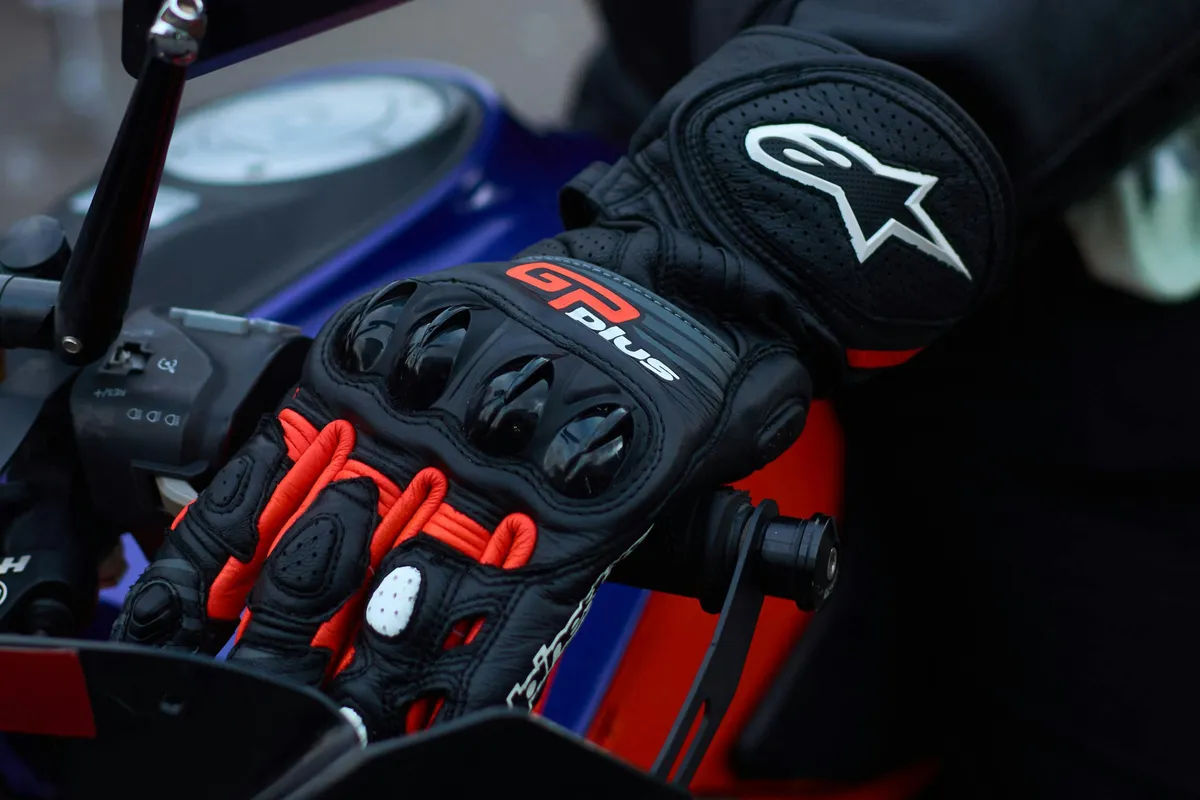
Check Price on Amazon UK →The Gloves: RST Urban Air 3 Hands hit the ground first in most falls, so gloves are not the place to cut the most corners, and the RST Urban Air 3 gives a new rider real protection without a big outlay. It is a short-cuff summer glove in perforated leather with CE Level 1 certification under CE EN 13594, a hard knuckle, and palm protection, with ventilation that keeps your hands livable once the sun is out. RST is a British brand that has long put certified protection into gloves at the value end, which is precisely what a first pair should be. The hard knuckle spreads a direct impact and the palm slider lets your hand skate across tarmac instead of catching and twisting your wrist.
Who it is for: the new rider who wants a properly certified summer glove that will not hurt to replace in a couple of seasons. The detail worth knowing is that perforated leather breathes far better than people expect once you are moving, since airflow over the holes does most of the work above thirty miles per hour. The honest limitation: it is a summer glove, so it is not waterproof and it stops being comfortable once the cold arrives, which means a year-round rider will want a second, winter pair before long. If you would rather start with a slightly more refined glove that you will keep as your warm-weather pair for years, the Alpinestars SMX-1 Air V2 is the natural step up, with a vented leather-and-mesh build and full CE EN 13594 certification.
RST Urban Air 3
RST
Summer commuter gloves with good ventilation and CE protection. Short cuff, perforated leather. Work well May-September for UK rid...
Check Price on Amazon →The full breakdown of summer and winter pairs, and why most UK riders end up owning both, lives in my best motorcycle gloves guide. For a first kit, a certified summer glove gets you riding, and a waterproof winter pair becomes the next purchase once the season turns.
Alpinestars SMX-1 Air V2
Alpinestars
A CE-certified short-cuff summer glove that breathes hard without giving up protection. Ventilated leather and mesh, a hard knuckl...
Check Price on Amazon →The Boots: TCX Street 3 Ankles are weirdly exposed on a motorcycle, pinned between the bike and the road, and ordinary shoes do nothing when a bike lands on or twists your foot, which is why the TCX Street 3 earns its place in a first kit. It is an everyday riding boot that carries CE EN 13634 certification, with reinforced ankle, heel, and toe protection and a stiffened sole that resists the twisting forces that break ankles in a drop, all in a boot that looks normal enough to walk around in once you are off the bike. TCX has a strong reputation for protective boots that you can actually live in, and the Street 3 is one of the most sensible first pairs you can buy.
Who it is for: the new rider and commuter who wants real foot protection without committing to a tall, stiff touring or race boot. The detail worth knowing is that the stiffened sole is doing quiet work even when nothing goes wrong, since it stops the boot folding around the footpeg and resists the forces that injure ankles. The honest limitation: a low everyday boot gives less ankle coverage than a tall touring boot, and its waterproof membrane is less robust than the Gore-Tex in a dedicated touring boot, so it is more of an everyday commuting choice than a hard-touring one. For most new riders, that is exactly the right tradeoff, and it beats the far more common and far more dangerous alternative of riding in trainers.
TCX Street 3 WP
TCX
Waterproof urban commuter boots that look like casual shoes. CE EN 13634 certified ankle protection with a waterproof membrane, in...
Check Price on Amazon →The Trousers: RST Kevlar Jeans Legs come last in the buying order, not because they do not matter but because a good pair of armoured jeans gives you a solid baseline cheaply, and the RST Kevlar jeans are a sensible place to start. They look like ordinary denim but are reinforced with aramid fibre, the same family of material as Kevlar, for abrasion resistance, and they take CE-rated armour at the knees so a knee that hits the road first is protected. For a new rider who wants to ride to work or to the test centre without changing trousers at both ends, that practicality is worth a lot.
Who it is for: the new rider and commuter who wants leg protection they can wear all day without looking like they are dressed for the track. The detail worth knowing is that aramid jeans vary a lot in how much of the leg is actually lined, so check that the protective material covers the seat, hips, and knees rather than just a panel or two. The honest limitation: armoured jeans give less abrasion protection than dedicated textile or leather trousers and the basic versions ship without hip armour, so they are the piece I would upgrade first once you understand your riding. As a starting point that gets real CE-armoured protection onto your legs cheaply, though, they do the job.
RST Kevlar Jeans
RST
Reinforced motorcycle jeans with CE knee armour and Kevlar (aramid) lining at impact zones. Look like regular jeans, offer real ab...
Check Price on Amazon UK →Not sure which pieces your riding actually demands? The rider type quiz sorts it out in about a minute based on the bike you ride, where you ride, and the conditions you face.
How the UK Certifications Fit Together
A first kit is easier to buy well once you know what the labels mean, because each piece of gear answers to a different standard. Helmets must meet ECE 22.06, the legal certification for road use in the UK, and the independent SHARP scheme then rates how well a given helmet performs beyond that minimum, which is why a SHARP star rating is worth checking alongside the legal mark. Jackets and trousers are graded under CE EN 17092, the garment abrasion standard, while the armour inside them is certified separately under CE EN 1621, with Level 1 as the baseline and Level 2 meeting tougher impact thresholds. Gloves answer to CE EN 13594, with a KP marking on the knuckle that has passed the impact test, and boots to CE EN 13634. You do not need to memorise the numbers, but knowing they exist stops you buying gear that looks protective without ever naming a standard.
Building It on a Budget: Where to Save and Where to Spend
The honest truth about a first setup is that not every piece needs your best money. Spend where the body part does not recover. Your helmet and your gloves protect your brain and your hands, which is why a well-rated lid and a certified glove come first and earn the larger share of the budget. The jacket is close behind, because torso abrasion and a CE Level 2 back protector matter a great deal, and the back insert is the cheap upgrade most new riders skip. Where you can sensibly save, at least at first, is on trousers: a pair of armoured jeans gives you a real baseline, and you can upgrade to dedicated textile or leather trousers later once you understand the riding you actually do.
The other budget lever is buying in the right order rather than all at once. You do not need the entire kit on day one if money is tight; you need a certified helmet, gloves, jacket, and boots before you ride or train, and the trousers can follow shortly after. Buy the helmet and gloves at the best quality you can stretch to, fill the rest with sensible value picks like the ones here, and upgrade individual pieces over a couple of seasons as you learn what your riding demands. A complete kit of honest, certified value gear beats a half-finished kit of premium pieces every time, because the gear you are not wearing yet protects nothing.
CBT and Test Requirements
There is a practical reason to have your kit sorted before you book training. A CBT instructor will refuse to teach you without proper protective gear, and most require, as a minimum, a helmet, gloves with hard knuckle protection, boots that cover the ankle, and a jacket with armour. Riding jeans are typically acceptable for training, which is another reason trousers can come last. Do not turn up in trainers or garden gloves and expect to be put on a bike. Having the core of your kit ready before your CBT booking is the difference between a productive day and being turned away at the gate, so treat the buying order above as a checklist to work through before that date.
What to Avoid
Avoid the false economy of riding in everyday clothes "just for now". Trainers, a hoodie, and bare hands offer no abrasion or impact protection, and most crashes happen close to home at ordinary speeds, which is exactly when riders talk themselves out of gearing up. The whole point of building a kit is that the decision is already made.
Be wary of cheap gear that shows off the look of protection without naming a standard. A hard plastic knuckle that never mentions CE EN 13594, a "motorcycle jacket" with no CE EN 17092 grading, or a boot that talks about rugged styling but not CE EN 13634 has not been tested to resist the forces that actually cause injury. If a listing sells you the look and stays quiet on certification, assume the protection is not there.
Never buy a used helmet, and be cautious with any used gear whose history you cannot verify. A helmet that has been dropped or crashed can have invisible damage to its protective liner, and armour degrades over time. The saving is not worth gambling the one piece of kit that protects your brain.
How to Choose: What Actually Matters
Fit beats brand and badge every time. A helmet that does not fit your head shape, gloves that bunch over the palm, or boots that pinch after an hour are gear you will not wear or that will not protect you properly. Try things on, walk around in the boots, make a fist in the gloves, and check the helmet does not shift with the strap done up.
Buy for the conditions you actually ride in. The UK is wet and cold for a good chunk of the year, so a waterproof jacket and, before long, a waterproof winter glove pay off far more than they would in a warmer climate. Be honest about whether you will commute year-round or ride mainly in summer, and let that shape what you prioritise.
Treat the back protector as part of the jacket, not an extra. Most jackets at this price ship with a foam back pad rather than real armour, so adding a CE Level 2 back insert is one of the cheapest and most worthwhile upgrades a new rider can make. The deeper breakdown lives in my best motorcycle jacket guide.
Plan to own two pairs of gloves eventually. No single glove is breathable enough for summer and warm enough for a British winter, so a certified summer pair now and a waterproof winter pair later is the sensible plan rather than a compromise. The full reasoning is in my best motorcycle gloves guide.
A note on safety: This guide is informational. I am not a certified safety professional. CE standards, SHARP ratings, and product specifications change over time, so always confirm the current certification on the manufacturer's documentation and check the fit before you buy. No gear eliminates risk; riding always carries it.
A first kit is a system, and every piece works with the others. Anchor it with a certified lid from my best motorcycle helmet guide, and if budget is the main constraint, the best helmets under 200 guide covers the SHARP-rated lids worth your money. Build out the torso with a CE-armoured jacket from the best motorcycle jacket guide, add the gloves and boots that protect the parts that touch down first from my best motorcycle gloves guide and best motorcycle boots guide. Cover head, torso, hands, feet, and legs and you have the core of a setup that lets you walk away from the kind of crash that wrecks riders in trainers and a hoodie.
What I'd Buy Today
If I were building a first kit this week, I would start with the HJC i70, because a SHARP-rated, ECE 22.06 helmet protects the one part of you that does not heal and it does it without premium money. Get the i70 on Amazon and you have a properly certified lid to build the rest of the kit around. From there I would add the waterproof, CE-armoured Oxford Montreal 5.0 jacket, the CE-rated RST Urban Air 3 gloves, the everyday TCX Street 3 boots, and a pair of CE-armoured RST Kevlar jeans to finish the set.
Buy in that order, get the fit right on every piece, and you have a complete, certified setup that protects properly and leaves room to upgrade as you go. The best gear is the gear you wear every single time, so build the kit once and let ATGATT make the decision for you. Still working out which pieces your riding demands most? Run the rider type quiz and let it point you the right way.
Frequently Asked Questions
Related Guides
Find Your Perfect Gear
Expert guides for helmets, jackets, gloves, boots, and more. Safety-focused recommendations for UK and US riders.
Browse All Guides